Good day, travelers. I quite enjoyed my little hiatus last week, and with the feedback I received - and a little extra time to think creatively - I have devised a new format for the continuation of our journey. I am curious to see how our spring season will unfold with a slightly different approach, and I am always interested in your thoughts and comments.
As I mentioned on the social forum, I do believe we are actually using to independent tools to promote behavior change in our lives: the activity book and blog and the social forum and point system. I initially thought having a sort of scholastic environment - book and workbook - combined with a support group performing similar daily behavior would feel familiar and comforting to everyone, but I now believe the blog and activity book would be more effective as materials for a real as opposed to virtual support group. This would promote accountability and allow for the possibility for persons to complete the workbook together. I would like people to continue to complete the activities as they are capable and share with the group, but there will no longer be points assigned for completion. As for the social forum, I see that most everyone is able to find 5-10 minutes on the weekend to report their behavior as it pertains to the "ante-up" points, and I would like to play off this participation and continue with the points system for daily behavior.
What this means going forward is that the blog will be a reference for us as we work towards changing our behavior but it's purely optional. I will post regularly although perhaps not daily. I will share insights about habits, motivation, and the instructions for the activities. I am simply asking those that are able to make the time to read to share their thoughts to do so. This way, I can continue to develop this tool.
Otherwise, the social forum is where it will all be happening as it pertains to our transformation and, of course, the pursuit of the petty cash prize. I will make the monthly intro video this week as usual and then it will be game on. I will maintain a list of how to earn points in the blog margin in case of doubt. I am sure focusing our attention on our daily decisions will lead to increased success.
Game on, travelers! Who's pumped?
Monday, March 30, 2015

Monday, March 23, 2015
Motivator Monday Recap
Good day, travelers. As we end the winter season, I took a minute to look back at all we've covered so far this year. Monday has been a busy day. Here are the topics we looked at:
- Luck favors the prepared
- Setting our sights high
- We are what we repeatedly do
- Doing our best
- The journey is the reward
- Strength versus power
- What doesn't work
- Planning
- Keeping an open mind
- Being Responsible
- Procrastination
I always find it helps to go back and take a look at what I've done as I try to plan on how to move forward. Looking at this list reinforces my resolve to transform myself into my ideal future self all the while making sure not to miss the journey and being sure to learn from what I might otherwise consider a failure.
Now is a good time to look back and take in everything that has happened this winter. I plan to make some changes to the format going forward, and I hope this winter has created a basis on which we will be able to build new behavior. There's only one way to find out: keep on going Around the Sun.
Saturday, March 21, 2015
Activity 12: Analyze the Process
Good day, travelers. Welcome to the final activity of winter! We are officially beginning a new season, and with every new beginning comes an end. This week's project is designed to help us think about our journey and the Around the Sun tool as it serves as a guide. It is an especially important project for me as I try to understand behavior and how it can be changed. I implore you to complete this project; to focus your thinking on the last three months and understand what worked and what worked less in terms of your ability to change.
This tool was created on the basis that in a perfect setting, if one completed every task assigned to him over the course of this journey, without realizing it, his behavior would improve automatically. The petty cash prize was intended to provide a motivator when thinking interfered with the automaton. If the goal had been achieved, each person in this group would now be exercising regularly, eating green vegetables regularly, and avoiding impulse purchases regularly without effort. Each person would also feel compelled to complete a small project every week just out of habit. The question is: have the parameters of this journey succeeded in creating automatic behavior or habits? Is the process of assigning a daily behavior or weekly behavior and subsequently rewarding that behavior a sufficient basis for change?
In addition to the fundamental process of forcing - and rewarding - behavior, there is also the interface to consider. Are the blog and the social forum effective? Do people feel they are able to make changes not being required by the tool with the support of the information provided on the blog and the interaction with others on the social forum?
Finally there is the workbook which is designed to make this journey tangible. I am using mine to remind me of the behavior I have already experimented with this year, and I find I am more able to focus and recall the progress I have made. Is this true for the rest of the travelers?
I would wager the answer to my first questions is no, and the answer to my subsequent questions is also no and the answer to my final question is no. The reason I would say this is because although initially there was significant interaction and participation within the group, the energy level has reduced significantly and participants are completing the activities less often. This reality requires my scientific mind to create a solution for the continuation of this experiment. The problem is that I'm not really sure if it's the process that is responsible for these results or the interface. I need your help and your thoughts as we continue this journey to adapt the tool.
There is a reason I asked for a year commitment from each of the travelers: I wasn't sure what process would be most effective in promoting change in a group of people with different goals. I am interested in everyone's thoughts as we close winter. What is good and what is not good as it pertains to Around the Sun the game? Post your thoughts to the social forum, or email me directly.
For 5 bonus point, use the snowflake to organize your thoughts as you analyze the game. If you've ever wondered how a snowflake forms, check it out here:
How a snowflake forms
Now think about how your life and your habits form. Are we that different - in terms of the universe - from a snowflake?
Friday, March 20, 2015
Friday FOOD Day with Vegetarian Coconut Curry
TGIF, travelers. It's time to eat again. This week's recipe is a soul food recipe for my husband. Pretty much any curry with a great sauce either tomato or coconut milk based brings him immediately back to the island he grew up on. I like to make this curry on Friday nights with what's left over in the crisper. I usually have a bell pepper, some fennel, carrots, leeks and sometimes celery on hand.
I have tried this recipe with zucchini and eggplant, but they just don't hold up, so it's best to use veggies that stew well. I even add in some potatoes - regular or sweet - to really please my husband. We eat potatoes and pasta so rarely that the boys feel like it's Christmas when these foods appear on their plates. This recipe is hearty and makes everyone feel full even though it doesn't contain any meat or beans; you could, of course, add either and it would be wonderful still.
Let's cook!
Vegetarian Coconut Curry
1 bell pepper
3-5 carrots
1 bulb fennel
1 onion
4-5 small potatoes
other low water content vegetables on hand
curry powder - one soup spoon
coconut milk - about 1 cup
salt to taste
Chop all the veggies and sauté them for a few minutes in some butter or olive oil (or coconut oil). Season with curry powder and sea salt. Cover the veggies with water a stew for at least 30 minutes preferably an hour reducing water as the veggies cook. When the water level is at about ⅓ of the original amount, turn off heat and add coconut milk. Reseason if needed.
That's it. A great way to get your veggies. Bon appetit!
For 5 bonus points, prepare this meal at home and share your thoughts with the group.
Thursday, March 19, 2015
Thursday Thoughts on Support
Good day, travelers. I have been thinking a bit about support these past few weeks for a few reasons: first, my inability to stick to my new behaviors when confronted with old, familiar circumstances really bothered me (and the fact it's taken me 2 weeks to get back on the wagon), and second, my husband recently watched a documentary on the primal lifestyle, and he is curious enough that he's talking about making the change himself.
These two incidents speak volumes to how important it is that the people you care about or even just spend time with buy in to the changes you are trying to make. Most likely these people have seen you try to make these changes before, and for one reason or another, you may not have followed through. It's possible that the reason is in fact the people you surround yourself with did not really understand or support your change.
Getting help is never easy even from our loved ones. Everyone has an opinion about how to live, and when we start to fly in the face of conventional wisdom, people gawk and start to undermine our efforts. Or they are neither supportive nor unsupportive which makes us feel like we are not accountable. This would be fine except most of us would be well served to have support during times of change.
As for me, thinking that my husband might actually give up sugar and grains (and subsequently enjoy better health) makes me ecstatic. I know it would be easier to change together. The incident I had with our friends, well, I write it off to being too early in the game, and I will try to do better next time or at least plan appropriately for some time off, so I don't feel like a failure. I am already practicing what I will say when I am offered something I don't want: no, thank you.
Having help or support can provide motivation and energy when we are feeling low. This tool was supposed to provide this to fellow travelers, but I wonder how effective long distance support can really be. I think it is better to discuss our goals with the people we see regularly, and solicit support in our efforts to change.
For 1 bonus point, tell us who you've discussed your goals with and whether you feel they support you.
Wednesday, March 18, 2015
Worry Free Wednesday with Procrastination
Hello, travelers. Let's have a laugh about procrastination, shall we? Smile and enjoy.


Tuesday, March 17, 2015
Tuesday Tutorial on Becoming a Productive Procrastinator
Good day, travelers. At long last, we are attacking the topic of procrastination this week. Seeing as though we have at least one self-proclaimed procrastinator amongst us, I am hopeful today's post will prove useful. As we saw yesterday, it is generally believed that procrastination is the enemy of action and therefore the enemy of progress. Today I would like to explore how to use procrastination to our advantage when possible and how to override our tendency to procrastinate when it is necessary to act.
Interestingly enough, procrastination has most often been correlated with impulsiveness over any other personality trait, and the reasoning goes that an impulsive person is less likely to plan out tasks and more likely to act sporadically on impulse. There is also some conjecture that this behavior can come from an underdeveloped or damaged frontal cortex - the part of the brain responsible for filtering out distraction and creating attention. I would postulate that women and men also live procrastination differently and have different reasons for putting off tasks. Men put off tasks that they believe are irrelevant to their own needs or to their ability to provide for their loved ones; women put off tasks that may seem selfish or may only serve to meet their own needs. The bottom line is: procrastination is a bit of a mystery, and when it is not helpful, it can be detrimental to the achievement of a person's goals.
It may not seem like procrastinating could ever be helpful, but I can think of many times when I saved myself some work and even came up with a better idea for completing a task just because I didn't really feel like taking action. Sometimes it is good to create some space for brainstorming and allowing ourselves to be creative, and action can be a direct threat to imagination. It is important to know when creativity is needed - you are thinking about how to do your future self video - or action is needed - the trash is overflowing. As such, my first tip for becoming a productive procrastinator is:
Tip #1: Create a habit of analyzing tasks appropriately. Tasks that require some thought may be put off in the interest of spending more energy thinking creatively. Tasks that are mundane or commonplace must be done immediately to declutter the mind and leave more room for creative thought. Men may place these daily tasks in the realm of providing a calm and productive atmosphere for himself and his loved ones. Women may relate to these tasks as a way to create a beautiful home for herself and her family. The way in which we relate to the task is paramount to providing a motivation for completing it.
Getting in the habit of decluttering our space and mind to open up the possibility for creative and productive thought may not be as easy as appropriately analyzing the task. Yes, we know that taking out the trash or washing the dishes is mundane, but just knowing this may not immediately motivate us to act. This brings me to my second tip:
Tip #2: Set the bar for action low at first. If you notice the dishwasher needs to be unloaded, say "I'll take one dish out." Open the door, and take out the dish. How do you feel? Maybe like just getting it over with. Maybe like just putting away the dish and going back to what you were doing. You can raise the bar a little bit by saying "I'll take out one dish every time I walk past the kitchen." The point here is to lower the amount of energy it requires to take action. This can work for filing papers, answering emails, putting laundry away, or any repetitive task. Sometimes once the ball is rolling, inertia takes care of the rest.
In some cases, when real responsibilities are thwarted through procrastination, there can be serious strain on a person whether financial, emotional, or even physical. When this is true, there is no other choice than to complete the necessary tasks in their full magnitude in order to alleviate the strain. Often the task will seem more difficult to complete than it is in reality especially if one can get help. This is tip number three:
Tip #3: If you are putting off a large task - the completion of which would significantly relieve your stress level - seek help. Call someone who knows what to do, ask a friend if they would join you for an afternoon while you work, or make it known in a social forum that you need support in your productivity.
If you are still inclined to retain your status as an expert procrastinator even when you've allowed yourself space for creativity and set the bar on the beginner level for action and sought help, it may be time to take yourself more seriously. You may have a real problem, or you may just be a bit immature in the frontal cortex. In my experience, the tendency to procrastinate reduces in frequency as we age. I knew some expert procrastinators in college; I even dabbled in the stuff myself until I realized I was no good at it. These experts, however, were incredibly productive as long as the deadline was only hours away; it was incredible to behold - the sheer drive to complete a project as the seconds tick away. Today, we all have jobs and kids and are as dependable as the setting sun. It just takes time. Having more experience helps us relate to tasks differently which is the final tip:
Tip #4: Change the way you relate to a task if it is generally difficult for you to complete it. I don't like to clean the bathroom, but I like even less seeing my boys splashing around in a dingy bathtub taking mouthfuls of questionably clean water. I see cleaning as a way to provide a safe and sanitary space for my family. It's all relative.
Part of becoming a productive procrastinator is also giving yourself a bit of a break. Life is about doing your best, so you can be proud of who you are. It doesn't mean you have to be as on top of things as the next guy. Keeping our life simple and free of clutter and remaining creative and responsible means something different for each of us. We all relate to our tasks in a different way. Who's to judge, anyway.
For 3 bonus points, comment on procrastination as it pertains to you.
Monday, March 16, 2015
Motivator Monday on Procrastination and Inaction
Happy Monday, travelers. It seems that spring is finally in the air, and we are soaring around the sun towards warmer and longer days. It's hard to believe almost three months are behind us. I wonder if there are some in our midst who believe they have not accomplished much in such a time. This is why this week, I would like to touch on the topic of procrastination and inaction, but I would like to approach this topic a bit differently than the typical lashing we all get when we are a bit lazy or unproductive. I would like to put a more positive spin on this trait, first, because I am a firm believer that what we resist persists, and second, because I believe sometimes inaction and reflection are critical to good planning and creativity.
In general, it is no secret that procrastination and inaction come with a negative connotation. A quick search for quotes pertaining to this topic yields few surprises, but I did come across one gem:
Imagination only comes when you privilege the subconscious; when you make delay and procrastination work for you.
Hilary Mantel - award winning British novelist
There are, of course, many words of a more standard take as well:
Inaction breeds doubt and fear. Action breeds confidence and courage. If you want to conquer fear, do not sit home and think about it. Go out and get busy.
Dale Carnegie
Iron rusts from disuse; water loses its purity from stagnation... even so does inaction sap the vigor of the mind.
Leonardo Da Vinci
We all have our opinion on when action should take place. We are all able to move ourselves to action but each of us in different ways and with different timelines. I would like to propose, for those of us that are in the habit of putting things off, that perhaps this trait is not so deadly as those predisposed to action may have us believe. Is there some value in allowing ourselves to just be: to reflect in stillness?
It is possible that not all of our inaction is replaced by creative thought and reflection, and in this case, I would argue that action is preferable, but for those who struggle with the habit of procrastination, it may be useful to really understand where that behavior comes from. Does it come from fear? Do you seek perfection and therefore fear the potential errors action brings? Do you thrive on impulse and therefore require spontaneity? Do you work best under pressure and therefore create stressful conditions for yourself? Or do you simply value thought, imagination, and dreaming over what you may physically and realistically be able to create? All of these circumstances favor inaction over action. If they apply to you, can you embrace who you are, or does it conflict with who you believe you are? If the latter is the case, you have no choice but to work towards action as your default mode. It is likely that you have already realized this, and you just need the tools to make the change.
In my experience, becoming a non-procrastinator is like becoming a person who exercises regularly. Once the habit is in place, it feels so good to continue, you rarely slip up. In fact, when you aren't able to be productive, it becomes annoying. However, I think it's important to accept and understand our behavior as it pertains to inaction, so as not to lose imagination and creativity, and then slowly but surely begin to make progress towards our desired habits. Simply saying "procrastinating is bad, and I want to stop" is not good enough. We must say "Inaction is for times when my dreams are unclear, and I need to be still and allow them to become clear. When my dreams are in focus, I pursue them with vigor!"
For 1 bonus point, share whether you have the tendency to procrastinate or put off action. Share the circumstances and reflect on where your behavior comes from and why.
Saturday, March 14, 2015
Activity 11: Open a saving account for big "extras"
Good day, travelers. How is everyone enjoying finance month? I find it to be more difficult than I originally planned, and I consider myself to be very frugal. I think this week's activity will help focus my efforts a bit and hopefully all of my fellow travelers as well. This week, we will start a savings account for big extras. The idea here is that even with a monthly budget, there are some things we will not be able to buy without extra planning. Our expert and finance guru, Elaine, says the amount of money that defines a big extra is different for everybody. It could be anything from a new laptop to Christmas gifts for the whole family to a big trip to a down payment on a car to laser hair removal (which I hear great things about :P).
Be careful not to confuse a big extras account with an emergency fund. An emergency fund is money that you hope you don't have to use, but that you have, as the name implies, in case of emergency. Most experts suggest having a fully funded emergency fund and all your debt paid off before starting to save for a big splurge, but for our purposes, we are going to save with a big dream in mind and make a grown up decision at the end of this journey on what to do with our money. The important thing is that the emergency fund and the big extra fund are not one and the same. There is no bigger bummer than having to use your island vacation money to repair the brakes on your car.
If you already have a savings account, you could convert this into your big extras account and open a separate account for an emergency fund. I have a personal savings account that I haven't assigned to a specific purpose, and sometimes I wonder just what the money in that account is for. I have decided not to convert it into a big extras account, though, and I plan on discussing with my husband whether we use his savings account for big extras and keep mine as an emergency fund.
This basically means that any individual or family should have at least two savings accounts: one that contains money not easily accessible that will be allocated towards a big purchase in the near future, and one that contains money not easily accessible that will be allocated towards an eventual disaster. Once these accounts are set up, you can budget for a monthly contribution or even yearly if you plan to use a bonus or raise as savings for big extras. You can put left over money in that account to keep yourself from overspending. You can also put money you get as a gift - or a petty cash prize - into that account and just sit back and watch the balance climb.
I did consider it may have been helpful to create both accounts in this activity, but I was hoping the dream of some large purchase in the near future would inspire us to save a bit of money this year. The idea was that at the end of this journey, as a reward for all our hard work, we would get something we had been dreaming of but hadn't yet had the discipline to work towards. Having to set up an emergency fund would have muddled the dream a bit, but it would have certainly been more responsible... What to do, what to do...
Here's what I think we could all do at the bare minimum: we will set up a savings account and transfer money into that account regularly for the remainder of our journey. At the end of the year, we can decide if we're ready to spend our savings on a dream, or if we would like to keep the money for emergencies and prolong our dream a bit. Or we can divide our money and get a bit of both. For now, we need the account, and we need to be contributing to the account regularly.
Once you have determined your saving strategy, share with the group. For 5 bonus points, color in the worksheet with your dream purchase to stay motivated!
Friday, March 13, 2015
Friday FOOD Day with Chicken Soup
TGIF, travelers. It's time to start another weekend with a great recipe. Seeing as though my little family has all been sick and most recently had the stomach flu, I have been making plenty of chicken soup. There are a million recipes for chicken soup, and if you make it at home, it's nearly impossible to have a bad batch. That being said, there are two ingredients that you must have if you are going to make an excellent pot of chicken soup: good chicken broth and a whole roast chicken. Incidentally, if you have a whole roast chicken, it is quite easy to make your own broth by just simmering the chicken carcass for a few hours. I don't even take the time to add aromatics - onions and celery and such - since I usually add them into my soup afterwards.
Here is my go to recipe for chicken soup. Let's cook!
Chicken soup
one whole roast chicken at least half the meat left
3-4 carrots
1 large stalk of celery
1 onion
mushrooms (optional)
bell peppers (optional)
rice or pasta (optional)
herbs de provence or cumin and paprika depending on taste preference
bay leaf if you have it
sea salt to taste
pepper to taste (optional)
We roast a chicken every weekend, and I always make a batch of broth with the carcass. This means during the week, I can throw together a pot of soup quite easily. I just sauté the carrots chopped into rounds with the celery chopped and onion chopped before adding in the chicken I removed before making the broth. I add either spice blend; we like them both. I add the broth, bring to a boil, and reduce to simmering for about an hour. At the end, I sometimes add in cooked rice or pasta. You can add it in uncooked if you want but it swells way up and the soup turns into goulash.
That's it - too simple to even have a recipe for really.
Bon appétit!
For 5 bonus points, make a batch of chicken soup - this or any recipe - and share your thoughts with the group.
Thursday, March 12, 2015
Thursday Thoughts on Why Should I?
Hello, travelers. I don't know about you, but I sometimes wonder why I bother to be responsible when it seems I am just making more work for myself. I certainly know plenty of people that are happy to eat, drink, spend and be merry thinking not one minute of the condition they may be in 20 or so years from now, but I insist on eating clean, exercising regularly, and saving money even when I just want to let it all go and watch TV for days on end.
I think the answer is different for each of us, but there is this element of fear that comes with not preparing for the future. This fear heightens when we experience a true reality check and are reminded of our fragility. I am thinking of a specific time; the time my father had a heart attack in Paris. I can remember the terror gripping me as the emergency responder told me on the phone, in French, what was happening. I was afraid for my dad: did he understand what was happening, was he in pain? Later, I was afraid for myself: could this happen to me? Was I making the right choices?
I don't really believe in living in fear or at least in letting fear control my action, but sometimes a healthy dose of reality and the natural fear response that comes with can provide an unquestionable reason to change. If being a little apprehensive about our future welfare can drive us to make better and more responsible decisions in the present, perhaps we should open our eyes, minds, and hearts to experiencing fear and the instinctive reaction that comes with.
For 1 bonus point, describe the last time you felt fear and how you reacted.
Wednesday, March 11, 2015
Worry Free Wednesday on Responsibility
Good day, travelers. Another hump day, and a few more jokes to get us over the worst and on to the weekend. I am ready for some comedy relief, so smile and enjoy!


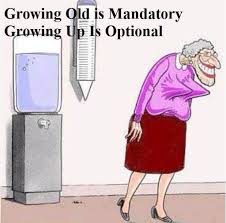

Monday, March 9, 2015
Motivator Monday on Being Responsible
Good day, travelers. As we start another week of our journey, I began thinking about responsibility. In fact, this topic is constantly on my mind as I raise two boys and try to do my best to transmit the concepts of respect and responsibility. It is quite obvious to me that neither of these concepts are inherent and must be learned over time and through experience. It is a matter of repeating over and over the words and phrases in the right context and hoping at some point their behavior will come from an understanding that what they do is their choice and the consequences of a lack of respect for others are dire. It is not easy to teach this concept, and I have had a good chuckle more than once as my oldest blames his brother for his actions (when it is quite evidently impossible anyone other than he is responsible).
For our purposes, I wanted to emphasize our duty to live in a way that celebrates the freedoms we enjoy while being considerate of ourselves and others. I found the following words on the topic:
For our purposes, I wanted to emphasize our duty to live in a way that celebrates the freedoms we enjoy while being considerate of ourselves and others. I found the following words on the topic:
Man is condemned to be free; because once thrown into the world, he is responsible for everything he does.
Jean-Paul Sartre
The price of greatness is responsibility.
Winston Churchill
I have had many opportunities as an immigrant to realize and appreciate the gifts my circumstances offer. When I think of those who have nothing, I can only live in a way that would not disrespect them. I live simply and make every effort to avoid being wasteful or overindulgent. I feel a responsibility to take care of myself seeing as though I have every possible advantage: clean running water, abundant healthy food, a steady income, and time to exercise my body. I would not wish to live in a manner that would forsake these gifts, and I would wish to be a model for my sons.
When we are young, we think only of the time when we will be free to make our own choices, but it is important to remember the responsibility we have to ourselves and society to live in a manner that would give more than take away. If we are sick, poor, and unhappy even with all the advantages of the first world, it is time to reexamine our choices.
For 1 bonus point, answer me this: are you living responsibly? What does this mean to you?
Saturday, March 7, 2015
Activity 10: Eating Clean
Good day, travelers. It's time for another activity, and it sounds like for some - myself included - this week's activity may provide some much needed focus and motivation for nutrition. This week we are going to experiment with eating clean.
Defining what clean eating is exactly is not easy, as there are many different schools of thought. Fitness magazine defines a clean food as any food that has not been processed. Considering cooking as a process would lead us to believe clean means raw, but I think that definition is a bit strict for our purposes. For us, just eating foods that are still recognizable from their natural state is good enough.
The goal this week is to really lighten up our diet. I am used to primal eating and allowing myself plenty of healthy fats, but it's true for weight loss that consuming even healthy fats can slow progress simply because fat contains so much energy i.e. calories. This week, we will stay away from saturated fats in dairy and fatty meats and eat plenty of lean meats, fruits and vegetables, and, if you like, whole grains and legumes like beans.
If you aren't catching on yet, these experiments are designed to help facilitate a permanent switch to an eating lifestyle that eliminates processed food and sugar. Lifelong health is not obtainable unless these foods are removed from our daily menu.
Do your best with this experiment, and for 5 bonus points, draw in the foods you threw in the "garbage" this week and add some color to your worksheet.
Friday, March 6, 2015
Friday FOOD Day with Poached Salmon and Snow Peas
TGIF, travelers. I am winding down the end of the week and preparing to leave tomorrow, and I started thinking about this week's clean eating experiment. It will be a nice change from the indulgent mountain French cuisine.
This week's meal is simple and delicious. We eat salmon every week, and we usually prepare it teriyaki style, but this version is much more adapted to clean eating.
Let's cook!
Poached salmon and snow peas
Salmon filets - 6-8 ounces per person
Snow peas - as much as you can eat or 1/2 cup per person
Lemon
Dill fresh or dried
Salt
Pepper
Good olive oil
Start with a wide skillet and about a half inch of water. Bring water to boiling, add salt, and add in snow peas. Cook until desired tenderness and remove. While cooking peas, season salmon with salt, pepper, and dill and thinly slice the lemon in rounds. Place enough rounds of lemon to cover the seasoned salmon filets and place everything into the simmering water. Cover and poach for about 5-8 minutes. Add snow pease back in to reheat. Remove everything with a slotted spoon and serve with lemon wedges and a drizzle of olive oil and sea salt if needed.
Voila! Bon appetit!
For 5 bonus points, make this meal and share your thoughts with the group.
Thursday, March 5, 2015
Thursday Thoughts on Taking it Easy
Hello, travelers. Seeing as though I am on vacation this week, I seem to be off track with making progress towards my future self. It's difficult, to say the least, to make and maintain changes when others around you are not on the same page. While we may be able to convince our close friends and family that our new choices don't mean we are totally weird, it's a bit harder with people that have come to expect certain behavior from you. Or is it?
This week has been tough for me, and I have slipped back into some of my old habits namely eating empty processed carbohydrates (ohhh the French baguette). Needless to say it's disappointing. I ask myself why I feel pressured to go with the flow as to make it easier for everyone else when it's completely sabotaging my efforts to change. Just because everyone is having smoked salmon toasts doesn't mean I have to, but it just feels rude to reject my host.
So I have decided to take this opportunity to observe how I feel being back in my old patterns. I am noticing how even when I permit myself to fall back into my old habits, I don't feel any happier or more content. If anything, I feel better physically and mentally when I am making batter choices, so this break has reinforced my motivation to return to "normal" better behavior.
In the end, I think planning some time to take it easy is crucial to success. However, I think the time must really be planned, so you don't feel like you are failing. I would've liked to have planned to take it easy this week, instead of thinking - unrealistically - that I was going to maintain my new habits. I know myself better than that. I am a go with the flow kind of girl. I have another vacation coming up in July, and I plan to indulge a bit. The one concession I refuse to make is drinking alcohol. I have not had a drop this week even with our old drinking buddies around, and it is an anchor for me. For the rest, I am letting myself take it easy a bit, and I'll be ready to hit the ground running when we're back home next week.
For one bonus point, share an occasion coming up when you are planning to take it easy.
Wednesday, March 4, 2015
Worry Free Wednesday Open Forum
Good day, travelers. I would love to share some funnies with you all today, but I have limited internet connection. Instead I would like to offer 5 bonus points for anyone who shares a good joke here or on the social forum.
Thank you for your participation!
Monday, March 2, 2015
Tuesday Tutorial on Observation
Good day, travelers. I hope everyone is feeling productive. Today's tips come from the heart of me as a scientist, so I would like everyone to put on their lab coats, metaphorically speaking, and join me in the lab. I know for some, the science lab may bring back awful memories of a poor experience, but in reality with the right direction, it is the perfect forum for learning and feeding our very curious minds. Let's dive in and see what we learn.
Our subject is ourselves. Of course before examining the subject, it is best to prep the mind with some questions. The point here is to provide some direction without limiting the outcome. As we observe ourselves, we may make discoveries that lead us in a quest for understanding that we didn't plan. The point here is to learn good observation skills, so we can determine the best course of action. Of course, as we have been doing all along, the objective is to change our habits in an effort to realize our best selves.
Seeing as though nearly half our daily decisions are automated, it is quite possible we have behaviors we don't really understand. Once upon a time long ago we made a choice that felt good, and today we no longer really know why we continue to make that same choice especially if we feel bad about ourselves for having that behavior.
With this in mind, we can go about our day in observation mode and begin to identify behaviors we don't really understand. That is: we don't like the behavior, and we want to change, but we need a better reason than just not liking the behavior. Good observation starts with some basic practices:
1) The mind is clear and focused on the task at hand; no worrying or thinking about other things
2) Occurences are viewed without judgement; if you go immediately into the kitchen for a cookie after lunch you don't beat yourself up; you just notice you wanted a cookie
3) If you see a trend or repeated occurence, you write it down
4) You recognize the difference between trends or repeated behaviors - habits - and behavior that occurs less often
5) You don't try to understand why until you have gathered enough data to support a theory
Every day we have the opportunity to observe ourselves and understand ourselves better. The more we understand about what makes us tick, the easier it will be to change. After a few days of good self observation, you can choose a few behaviors you know you want to change and try to establish a solid basis or reason to make the change. A good scientist works on a limited array of variables choosing carefully to ensure he learns something of value. Trying to experiment with too many variables only makes things confusing.
For 3 bonus points, spend a few hours observing yourself. Share what you observed and if you would like to change. If you have determined the reason you want to change, please share as others may also identify with your experiment.
Motivator Monday on Keeping an Open Mind
Hello, travelers. Another week begins as we circle our star, and I've been wondering how each of your individual journeys are playing out. I wonder if you are truly questioning yourself and trying to understand fundamentally who you are and what you believe you're capable of. This lead me to the topic of assumptions, and I chose this quote on refreshing your thoughts:
Your assumptions are your windows on the world. Scrub them off every once in a while or the light won't come in.
Isaac Asimov
What I liked about this quote is the imagery. Perhaps that's because I live in a place where light is precious, or perhaps it's because the idea of refreshing my beliefs from time to time really resonates with what I have experienced. There have been many times when I was humbled by my assumptions being proven wrong not the least of which was my initial judgement of my own husband's gentle nature. I mistook it for weakness coming from a culture where manliness means never showing true emotion or even compassion, and I was devastatingly wrong. My husband is my hero.
As for my own self-image, I have surprised myself with strengths and weaknesses I wouldn't have assumed to be true. I have learned that depending on another person can be empowering, and that controlling my own thoughts is the secret to inner peace. I once thought happiness was only possible if I had no enemies or poor human encounters.
I wonder what my fellow travelers think is true about themselves inside and outside. Do you tell yourself: I could never...? Is it time to scrub off that assumption and prove yourself wrong? Is it really true that anything is possible if we just make one good decision at a time and believe in ourselves?
For 1 bonus point, share something you assume to be true about the world. Is it really true?
Subscribe to:
Posts (Atom)